

When it comes to enhancing home security and convenience, video doorbells have become a popular choice for many homeowners. In this comparison, I’ll explore the key differences between Smart Video Doorbells and Wireless Video Doorbells. By examining their features, functionalities, and practical applications, I hope to provide a clear understanding of which option might be the best fit for your needs. Whether you prioritize advanced smart features or the simplicity of wireless design, there’s a lot to consider.
Smart Security


The 1080P Smart Wireless Video Doorbell Camera offers advanced AI human detection and real-time alerts, ensuring you only receive notifications that matter while staying connected through two-way talk. With a portable indoor chime and family access features, it provides a convenient and secure way to monitor your home from anywhere.
**Smart Home
The Wireless Wi-Fi Video Doorbell Camera offers two-way audio for easy communication and AI motion detection for enhanced security, along with clear night vision and cloud storage for accessible recordings. Built to withstand tough weather, it operates on 2.4GHz Wi-Fi for a reliable connection.
Smart Video Doorbell
Video Capture Resolution
1080p
Power Source
Battery Powered
Included Components
Video doorbell, Chime
Weather Resistance
Weather-Resistant
Installation Type
Screw In
Wireless Video Doorbell
Video Capture Resolution
1080p
Power Source
Battery Powered
Included Components
Doorbell Camera, Adhesive tape, mounting accessories
Weather Resistance
IP65 Weather Resistant
Installation Type
Door Mount (Adhesive tape included)
Smart Video Doorbell
Wireless Video Doorbell
Smart Video Doorbell
Wireless Video Doorbell
Comparison chart

Unique Selling Points (USPs)

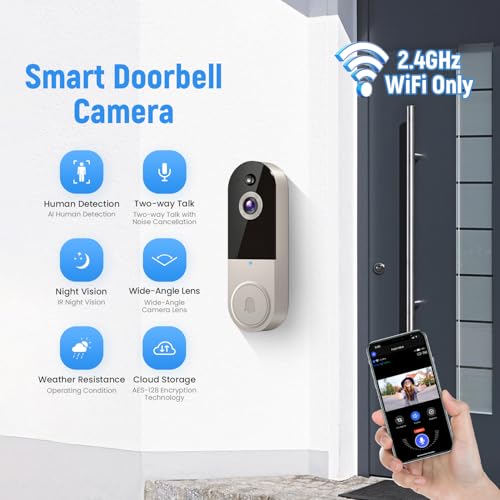

1080P Smart Wireless Video Doorbell Camera
- AI Human Detection: This feature minimizes false alerts by distinguishing between humans and other objects.
- Includes Chime: Convenient for those who want an additional alert method at home.
- Robust Weather Resistance: Ensures durability against various weather conditions.
Wireless Wi-Fi Video Doorbell Camera
- Standard Two-Way Audio: Allows for communication through the doorbell.
- AI Motion Detection: Alerts you to motion, making it easy to monitor activity.
- Sleek Design: Often more compact and stylish, appealing to users focused on aesthetics.
Similarities


- Both products provide 1080P resolution, ensuring high-quality video.
- They both feature night vision, allowing clear visibility even in low-light conditions.
- Both are compatible with 2.4G WiFi only and offer cloud storage for footage.
- Each has weather-resistant properties, making them suitable for outdoor installation.
Pros and Cons
1080P Smart Wireless Video Doorbell Camera
- Pros:
- Advanced AI human detection reduces false alarms.
- Comes with a chime, adding convenience.
- Rechargeable battery ensures low maintenance.
- Cons:
- Slightly bulkier than some other models.
Wireless Wi-Fi Video Doorbell Camera
- Pros:
- Simple installation and setup.
- Compact design fits with various home styles.
- Cons:
- Lacks chime, requiring a separate purchase if desired.
- General motion detection may lead to more false alerts.
Use-Cases
1080P Smart Wireless Video Doorbell Camera
- Ideal for families wanting to monitor human traffic and reduce false alerts.
- Great for homeowners who appreciate a built-in chime for notifications.
Wireless Wi-Fi Video Doorbell Camera
- Perfect for minimalists who prefer a sleek design without extra gadgets.
- Suitable for users who are more concerned about motion than specific human detection.
Conclusive Assessment
In this comparison, the 1080P Smart Wireless Video Doorbell Camera emerges as the clear winner for users who prioritize advanced features like AI human detection and convenience with the included chime. However, the Wireless Wi-Fi Video Doorbell Camera holds its ground for users who value a compact design and simplicity.
Final Summary
Both video doorbell cameras offer great features suitable for various needs. If you want the best in technology with added convenience, go for the 1080P Smart Wireless Video Doorbell Camera. On the other hand, if you prefer a straightforward, stylish option, the Wireless Wi-Fi Video Doorbell Camera is a solid choice. Evaluate your priorities—whether it be advanced detection, added convenience, or sleek design—to find the perfect match for your home security needs!
Comparing Doorbell Cameras: A Friendly Guide
When it comes to enhancing your home security, doorbell cameras have become a popular choice. With various options available, it’s essential to compare different types effectively. Here, we’ll outline general guidelines and key factors to consider when comparing products in the doorbell camera category, such as Smart Video Doorbells versus Wireless Video Doorbells.
1. Understanding Types of Doorbell Cameras
Smart Video Doorbells
Smart video doorbells connect to your home Wi-Fi and can be accessed via a smartphone app. They often come with advanced features.
Key Features:
- Two-way audio: Communicate with visitors through your phone.
- Motion detection: Alerts you when someone approaches.
- Cloud storage: Save recordings for later access.
- Integration with smart home systems: Works with devices like Amazon Alexa or Google Assistant.
Wireless Video Doorbells
Wireless video doorbells are easier to install since they don’t require wiring. However, they may have some limitations compared to smart options.
Key Features:
- Battery-operated: No need for electrical outlets.
- Easy installation: Minimal tools required.
- Basic features: Usually fewer advanced functionalities compared to smart models.
2. Key Factors to Consider
A. Video Quality
- Resolution: Look for HD (1080p or higher) for clear images.
- Night vision: Essential for low-light conditions.
B. Connectivity
- Wi-Fi compatibility: Ensure it works with your home network.
- Range: Consider how far the doorbell is from your router.
C. Storage Options
- Cloud storage vs. local: Understand the differences in accessibility and costs.
- Free vs. paid plans: Some manufacturers offer free storage for a limited time.
D. Installation
- Wired vs. wireless: Decide which installation method suits your home.
- Ease of setup: Look for user-friendly installation processes.
E. Smart Features
- Integration with smart home devices: Check compatibility with your existing systems.
- Mobile app functionality: Ensure the app is user-friendly and reliable.
3. Benefits of Each Type
Benefits of Smart Video Doorbells
- Enhanced security: Real-time alerts and video access.
- Remote access: Monitor your door from anywhere.
- Advanced features: Customizable alerts and smart integrations.
Benefits of Wireless Video Doorbells
- Convenience: No wiring needed; ideal for renters.
- Portability: Can be relocated easily.
- Lower upfront cost: Generally less expensive than smart models.
4. Budget Considerations
- Initial cost: Factor in the price of the doorbell and any additional accessories.
- Ongoing subscription fees: Some features may require a monthly payment.
5. Customer Reviews and Ratings
- Research user feedback: Look for reviews on reliability and performance.
- Check ratings: Higher ratings typically indicate a better product.